
Gas vs. Wood Fire Pit
TL;DR: A wood fire pit delivers the classic crackle, smoky scent, and higher heat output, and it usually costs less to build, but it takes more effort to light, tend, and clean up. A gas fire pit (natural gas or propane) lights at the flip of a switch, produces little smoke, and gets used far more often on weeknights, though it requires a gas line or tank and a higher upfront investment. In New England, where shoulder-season evenings are short and neighbors are often close, many homeowners favor gas for convenience, while those with larger lots and a love of traditional fires stick with wood.
To design a fire feature that fits how you use your yard, contact ND Landscape Services at (978) 352-5400.
The Experience: Ambiance vs. Ease
The biggest difference between gas and wood isn’t the price — it’s how each one feels to use.
A wood fire pit is the full campfire experience: crackling logs, real flames that shift and pop, the smell of woodsmoke, and the ritual of building and tending the fire. For many families, that ritual is the point.
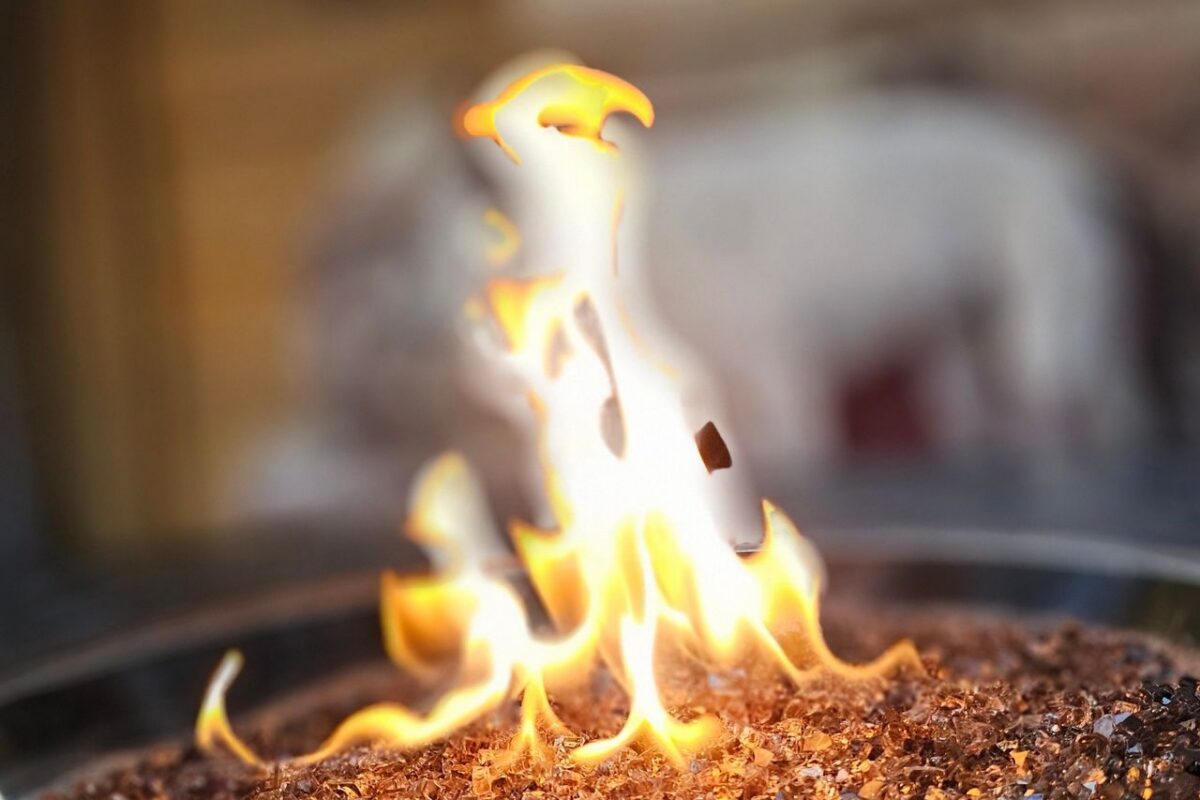
A gas fire pit trades some of that character for ease. Flames are steady and controllable, there’s no smoke in your eyes when the wind shifts, and the fire can be turned off the moment everyone heads inside. Modern burners with fire glass, lava rock, or ceramic logs look far more natural than older units did.
A good rule of thumb: if you picture long weekend nights around the fire, wood is hard to beat. If you picture a quick 45 minutes outside after dinner on a Tuesday in October, gas will get used far more often.
Upfront Cost and Installation
Wood fire pits are generally the lower-cost option to build. A built-in wood pit needs a solid base, a fire-rated liner or firebrick interior, and a stone, block, or paver surround — no utility work required.
Gas fire pits add a few cost factors:
- Gas supply. Natural gas requires running a line from the house, typically trenched under the lawn or patio. Propane avoids trenching but means a tank, either hidden inside the pit structure or nearby.
- Burner and ignition system. Options range from simple match-lit burners to electronic ignition with remote or smartphone control.
- Permits and inspections. Gas work generally must be performed by a licensed professional and may require a permit.
If you’re building a new patio, it’s often worth running a gas line during construction even if you start with wood — adding it later usually means cutting into finished hardscape. Our landscape design team plans these details before any digging begins.
Ongoing Costs and Maintenance
Over the long run, the two options shift in the other direction.
- Wood requires buying or splitting firewood, storing it dry and off the ground, and cleaning out ash regularly. Embers can stain nearby pavers, and soot builds up on the interior over time.
- Gas has ongoing fuel costs (natural gas is typically cheaper to run than propane) but almost no cleanup. Annual maintenance usually means clearing debris from the burner, checking connections, and winterizing covers.
For busy households, the low-maintenance side of gas is often the deciding factor.
Heat Output and Seasonal Use
Wood fires generally put out more radiant heat, which matters on a cold November night. A well-built wood fire can keep a full ring of guests comfortable in a way smaller gas burners sometimes can’t.
Gas fire pits vary widely in heat output depending on burner size, so it’s worth sizing the burner to the seating area. Gas has a seasonal advantage of its own: because it’s ready instantly, it tends to extend the season into early spring and late fall, when a full wood fire feels like too much effort for a short evening outside.
Smoke, Neighbors, and Local Rules
Smoke is one of the most overlooked factors in this decision, especially on tighter suburban lots across the North Shore and Metro Boston.
- Wood smoke drifts into neighboring yards and open windows and can bother anyone with asthma or allergies.
- Gas burns far cleaner, with little visible smoke or odor.
Local rules matter, too. Some Massachusetts and New Hampshire towns regulate recreational wood fires, require minimum setbacks from structures and property lines, or restrict burning during dry conditions or high-wind days. Gas fire features are often treated differently than open wood burning. Always check with your local fire department before building — it’s one of the first things we confirm during design.
Design and Placement Considerations
Whichever fuel you choose, the fire pit should feel like part of the landscape rather than an add-on.
- Seating. Built-in seating walls or a ring of chairs about 7–10 feet across the center of the fire keeps everyone comfortable without crowding the heat.
- Wind. Place the pit where the house, a fence, or plantings break the prevailing wind — this matters more for wood smoke but also keeps gas flames steady.
- Materials. Natural stone, concrete block with stone veneer, and pavers all hold up well to New England freeze-thaw cycles.
- Lighting. Low-voltage path and step lights keep the space safe once the sun goes down.
For more layout inspiration, see our guide to backyard fire pit ideas.
Quick Comparison
| Factor | Gas Fire Pit | Wood Fire Pit |
| Ambiance | Steady, clean flames | Crackle, scent, classic campfire |
| Ease of use | Instant on/off | Build, tend, extinguish |
| Upfront cost | Higher (gas line/tank, burner) | Lower |
| Maintenance | Minimal | Ash cleanup, wood storage |
| Heat output | Moderate, depends on burner | Higher |
| Smoke | Very little | Noticeable |
| Best for | Frequent, short weeknight use; tighter lots | Weekend gatherings; larger lots |
Choosing the Right Fire Feature
There’s no universal winner in the gas vs. wood fire pit debate. The right choice comes down to how often you’ll use it, how close your neighbors are, your local rules, and whether the ritual of a real wood fire matters to you. Some of our clients even build both — a gas fire feature on the main patio and a wood pit farther out in the yard.
If you’re planning a fire pit for a North Shore, Metro Boston, or Southern New Hampshire property, ND Landscape Services can design and build one that fits your yard and lifestyle. Call (978) 352-5400 or request a consultation to get started.
FAQ: Gas vs. Wood Fire Pit
Is a gas or wood fire pit cheaper?
A wood fire pit is usually cheaper to build because it doesn’t require a gas line, burner, or ignition system. Over time, though, buying firewood and handling cleanup can narrow the gap, and natural gas is relatively inexpensive to run.
Does a gas fire pit give off real heat?
Yes. Gas fire pits produce noticeable warmth, though typically less than a large wood fire. Sizing the burner correctly for your seating area makes a big difference in comfort.
Can I convert a wood fire pit to gas?
Often, yes. Many built-in wood fire pits can be fitted with a gas burner kit, but you’ll need a gas supply run to the pit. Planning a gas line during the original build makes a future conversion much easier.
Are wood fire pits allowed in Massachusetts?
Rules vary by town. Some communities restrict recreational wood fires, require setbacks from structures, or limit burning during dry or windy conditions. Check with your local fire department before building.
Which fire pit is better for a small yard?
Gas is usually the better fit for smaller yards and close neighbors because it produces little smoke and needs less clearance for wood storage. A compact, well-placed wood pit can still work if local rules allow it.
Photo by Gary Saamanen