
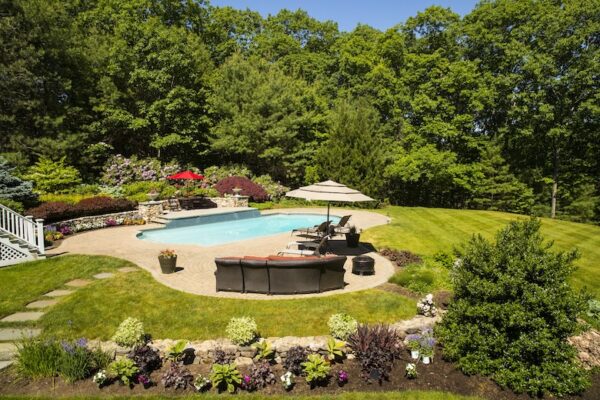
The best backyard ideas make an outdoor space both more attractive and easier to use. Instead of filling the yard with unrelated features, a strong backyard design creates clear areas for relaxing, dining, entertaining, gardening, playing, and moving between spaces. Homeowners can improve functionality with patios, walkways, shade structures, fire features, gardens, lighting, privacy screening, and flexible lawn areas. The right combination depends on the size of the property, how the family spends time outdoors, the amount of maintenance they want, and how the landscape changes throughout the year. For homeowners in Georgetown, MA, thoughtful planning is especially important because an outdoor space should remain attractive and practical through New England’s changing seasons.
A backyard often has more potential than homeowners initially realize. An open lawn may provide space, but it may not give people a clear reason to spend time outside. Likewise, a small patio may technically provide seating while still feeling disconnected from the rest of the property. Good landscape design looks at the entire yard as an extension of the home. It considers how people walk from the house to the patio, where guests gather, where afternoon shade falls, what views should be highlighted, what areas need privacy, and how plants can soften hard surfaces. When these details work together, the backyard begins to feel less like unused land and more like a comfortable outdoor living environment.
ND Landscape Services approaches backyard design around the way homeowners actually want to use their property. The company offers outdoor features that can include patios and decks, outdoor kitchens, landscape lighting, custom stonework, fire pits and fireplaces, fencing, arbors, pergolas, pavilions, garden structures, water features, and recreational spaces. Its backyard design services are built around connecting those elements into a landscape that fits the homeowner’s lifestyle. Homeowners considering Residential Backyard Landscape Design in Georgetown, MA can use professional planning to turn disconnected ideas into a more unified outdoor environment.
15 Backyard Ideas for a More Useful and Attractive Outdoor Space
1. Create a Defined Patio or Outdoor Seating Area
A well-designed patio can become the central gathering space of a backyard. Instead of placing a few chairs randomly on the lawn, a defined hardscape area gives outdoor furniture a permanent home and establishes a comfortable place for conversations, meals, or quiet evenings. The patio should be sized for the furniture homeowners actually plan to use, including enough room for people to move behind chairs and around tables. Its location should also connect naturally with the house while taking sunlight, privacy, drainage, and surrounding views into account. Materials such as natural stone or pavers can help the patio complement the architecture of the home and other landscape features.
The strongest patio designs also leave room for the backyard to evolve. A homeowner may initially want a seating area but later decide to add a grill station, fire feature, pergola, or outdoor kitchen. Planning circulation, utilities, and surrounding space early can make these future changes easier. ND Landscape Services notes that patios can support different zones for dining, lounging, cooking, and gathering, while lighting and shade can be integrated into the overall layout from the beginning.
2. Add an Outdoor Dining and Cooking Zone
An outdoor dining area can turn the backyard into a practical extension of the home’s kitchen and entertaining space. It can be as simple as a dining table near a grill or as detailed as a built-in outdoor kitchen with preparation surfaces, storage, refrigeration, and cooking equipment. The best layout keeps cooking close enough to the house for convenience while still giving guests comfortable space away from heat and smoke. Homeowners should also think about lighting, wind direction, shade, and the route between the indoor kitchen and outdoor dining area.
An outdoor kitchen can be especially useful for homeowners who entertain frequently because it reduces repeated trips indoors while keeping the gathering centered outside. However, the design does not need to include every possible appliance. A smaller cooking station with durable counters and thoughtful storage may provide better value for a family that primarily grills on weekends. The important goal is matching the feature to real habits rather than building a larger space that receives little use.
3. Build a Fire Pit or Outdoor Fireplace Area
A fire feature can give homeowners a strong reason to use the backyard during cooler evenings and shoulder seasons. Fire pits tend to create a relaxed, circular gathering environment, while outdoor fireplaces can become a stronger architectural feature that defines one side of a patio or outdoor room. Either option can work well when seating, circulation, fuel type, surrounding materials, and safety clearances are considered during design.
The fire area should feel integrated with the landscape rather than added as an isolated feature. Seating walls, nearby planting beds, pathway lighting, and surrounding stonework can connect it visually to the rest of the yard. ND Landscape Services incorporates fire features with patios, seating areas, lighting, and other outdoor living elements, allowing the feature to become part of a larger backyard plan rather than a separate project.
4. Use Walkways to Connect Different Backyard Zones
Pathways can dramatically improve how a backyard functions because they guide movement and create visual organization. Without defined circulation, people may cut across lawns, planting beds, or wet areas to reach a patio, garden, shed, or pool. A thoughtfully positioned walkway solves that problem while adding structure to the landscape. Paths can be formal and symmetrical or informal and gently curved depending on the architecture of the home and the style of the garden.
Material selection also affects both appearance and maintenance. Stone, pavers, gravel, and other suitable landscape materials can each create a different character. The walkway should be wide enough for comfortable movement and should lead somewhere meaningful instead of ending without purpose. Lighting along key routes can improve visibility in the evening and help connect outdoor spaces after sunset.
5. Create Garden Areas With Seasonal Interest
Garden beds add color, texture, softness, and movement to outdoor spaces. However, successful planting design involves more than choosing flowers that look attractive at the garden center. Homeowners should consider mature plant size, sunlight, soil conditions, moisture, bloom periods, foliage texture, and the amount of maintenance each plant requires. Mixing shrubs, perennials, ornamental grasses, and other appropriate plants can provide visual interest for a longer portion of the year.
For Georgetown homeowners, seasonal planning is especially valuable because the landscape changes substantially throughout the year. A garden that relies entirely on a short summer bloom period may feel empty during spring, fall, and winter. Layering plants with different flowering periods, foliage colors, evergreen structure, and winter interest helps the backyard maintain character as seasons change.
Some high-impact combinations for a functional backyard can include:
- Patio seating paired with nearby planting beds for softness and privacy.
- An outdoor dining area positioned close to the home for convenience.
- A fire feature connected to the main patio by a clear walkway.
- Low-voltage lighting along paths, steps, and entertaining zones.
- Shade structures over areas that receive strong afternoon sun.
- Garden beds used to frame spaces rather than fill every open area.
These combinations work because the features support one another. The result often feels more intentional than installing each element separately over several years without an overall plan.
6. Add Privacy With Layered Plantings, Fencing, or Screens
Privacy can make a backyard feel considerably more comfortable, especially where neighboring homes, roads, or nearby gathering spaces are visible. However, privacy does not always require a solid wall around the entire property. Layered plantings can soften views while creating a more natural appearance. Fences, gates, arbors, and strategically placed screens can provide stronger separation where needed without making the yard feel enclosed.
The best solution depends on the view homeowners want to block and how quickly they need privacy. Evergreen plants can provide year-round screening, while deciduous trees and flowering shrubs add seasonal character. Structures can create immediate separation and then be softened with vines or plantings. Instead of creating the same level of screening around every boundary, homeowners can focus on seating areas, dining spaces, hot tubs, or other locations where privacy matters most.
7. Use Landscape Lighting to Extend Backyard Use Into the Evening
Outdoor lighting allows homeowners to enjoy the backyard after sunset while also highlighting important landscape features. Good lighting is usually subtle. Rather than flooding the entire yard with bright fixtures, a layered plan can illuminate steps, pathways, patios, trees, stonework, and gathering spaces where additional visibility is useful. This approach improves function while creating depth and atmosphere.
Lighting can also change how homeowners experience familiar landscaping. A mature tree that blends into the background during the day may become an attractive focal point when softly illuminated at night. Likewise, pathway fixtures can visually connect separate outdoor zones. Because electrical routes and fixture placement affect construction, homeowners planning a larger backyard renovation may benefit from including lighting early rather than treating it as an afterthought.
8. Add Shade With a Pergola, Pavilion, or Strategic Planting
A backyard can look beautiful but remain unused during the hottest part of the day if it lacks shade. Pergolas, pavilions, umbrellas, shade trees, and other structures can make patios and seating areas more comfortable. Permanent structures also help define outdoor rooms by creating a ceiling-like element over dining or lounging spaces.
The correct level of shade depends on how the space will be used. A dining patio may benefit from substantial protection during midday, while a garden seating area may only need filtered shade. Homeowners should also consider where the sun moves throughout the day rather than evaluating the site at only one time. Planning around existing trees can sometimes provide natural shade while preserving mature landscape character.
9. Keep Flexible Lawn Space for Recreation
Not every section of a backyard needs a permanent structure or garden feature. Open lawn can provide valuable flexibility for children, pets, casual sports, parties, and activities that change over time. The key is giving the lawn a purpose instead of allowing it to occupy leftover space between other features.
A practical lawn area should connect naturally with patios and walkways while remaining large enough for its intended activities. Homeowners who rarely use a large lawn may decide to convert part of it into gardens, seating, or another outdoor feature. Conversely, families with children or pets may value an open central area more than additional hardscape. Good design balances programmed spaces with flexible areas that can adapt as family needs change.
10. Introduce a Water Feature as a Visual Focal Point
Water features can bring sound, movement, and visual interest into a backyard. A small fountain may create a calming focal point near a seating area, while a larger pond or integrated water feature can become a major landscape element. The feature should match the scale of the property and the amount of maintenance the homeowner is willing to manage.
Placement matters because water features are most valuable when people can see or hear them from areas they actually use. A beautiful fountain hidden in an isolated corner may have less impact than a smaller feature positioned near a patio or walkway. Lighting, plantings, and stone can help connect water features to the surrounding landscape and make them feel intentional.
Before choosing larger improvements, homeowners should ask themselves:
- Will we use this feature at least several times during the season?
- Does it solve an existing problem or simply add visual interest?
- Can we maintain it comfortably?
- Does it fit the scale of our home and property?
- Will it interfere with future plans for the backyard?
- Can it connect visually and physically with existing outdoor spaces?
These questions help separate useful investments from features that may look appealing in photographs but do not fit the homeowner’s lifestyle.
11. Use Changes in Elevation to Create Distinct Outdoor Rooms
Properties with slopes or natural grade changes can use elevation as a design advantage rather than treating it only as a problem. Terraces, steps, retaining walls, and multi-level patios can divide a backyard into clearly defined zones while making steep or awkward areas more functional. One level might hold an outdoor dining area, while another provides a fire pit, garden, or lounge space.
Even relatively flat properties can benefit from subtle changes in elevation. A raised planting bed, low seating wall, or small step between patio zones can create visual separation without requiring fences or large structures. However, grading, drainage, and structural requirements need careful planning. Professional design can help ensure changes in elevation improve the yard instead of creating water management or accessibility problems.
12. Add Attractive Storage That Supports Outdoor Living
Backyards function better when homeowners have a convenient place to store tools, cushions, garden supplies, recreational equipment, and other outdoor items. A shed or integrated storage feature can reduce clutter around patios and keep equipment protected. Instead of treating storage as a purely practical structure hidden at the edge of the property, homeowners can incorporate it into the landscape with coordinated materials, screening plants, pathways, and appropriate placement.
Storage should also reflect how the backyard is used. Gardeners may need space for tools and soil products, while families with children may prioritize sports equipment and toys. Outdoor kitchens may benefit from built-in cabinets. Planning storage at the same time as other improvements can prevent everyday items from taking over seating and entertaining areas.
13. Design a Recreation or Sports Area
Homeowners who want an active backyard can dedicate space to recreation. Depending on available room, this may include a sports court, putting area, play lawn, or another activity zone. The goal is to create a space that encourages regular use without overwhelming the rest of the landscape. ND Landscape Services lists tennis and sports courts among the backyard features it can incorporate into residential outdoor spaces.
Recreation areas should account for noise, lighting, drainage, neighboring properties, and circulation around the activity zone. Plantings or fencing may help visually separate the area from quieter seating spaces. Families should also think long term. A flexible recreation zone may adapt more easily as children grow or hobbies change.
14. Build a Comfortable Poolside Living Area
For homes with pools, the surrounding landscape strongly affects how useful the entire area feels. Poolside design should provide enough room for circulation, lounging, shade, dining, and storage while keeping paths organized. Plant choices should also complement the pool environment without creating excessive debris or maintenance around the water.
Rather than treating the pool as a feature floating in the middle of the property, homeowners can connect it to patios, outdoor kitchens, fire areas, gardens, and walkways. This creates a complete outdoor living environment. Shade structures or cabanas can provide relief during sunny afternoons, while landscape lighting helps the space remain attractive in the evening.
15. Design for Four-Season Visual Interest
One of the most practical backyard ideas for Georgetown, MA is designing the landscape to remain attractive beyond summer. New England homeowners experience a strong change between seasons, so the yard should still have structure when flowering plants are dormant and outdoor furniture is stored. Evergreen plants, ornamental grasses, distinctive bark, stone walls, pathways, lighting, and well-shaped trees can maintain visual interest throughout colder months.
Seasonal design does not mean every area must look identical year-round. Instead, the landscape should have enough permanent structure that it still feels intentional after leaves fall. Spring bulbs can introduce early color, summer perennials can provide fullness, fall foliage can create warmth, and evergreen elements can carry the design through winter. This layered approach makes the backyard more rewarding throughout the year.
How to Plan a Backyard Improvement Project Step by Step
A successful backyard renovation begins with priorities rather than products. Homeowners should first identify what is currently preventing them from enjoying the yard. Perhaps there is nowhere comfortable to sit. Maybe the patio is too small for entertaining. Privacy may be limited, drainage may interfere with lawn use, or the yard may simply lack clear organization. Once these problems are defined, homeowners can decide which improvements solve them most effectively. This creates a stronger design than beginning with a list of features and attempting to fit all of them into the property.
Next, the overall layout should be considered before individual materials or plants are selected. The relationship between the house, doors, patios, paths, gardens, utilities, grade changes, trees, and property boundaries affects what can work comfortably. Homeowners should also think about future plans. If a pool, outdoor kitchen, pergola, or larger patio may be added later, early planning can preserve enough space and avoid costly rework.
A practical planning sequence includes:
- Define how the family wants to use the backyard.
- Identify existing problems such as poor circulation, limited shade, or weak privacy.
- Mark the areas that receive sun, shade, and regular foot traffic.
- Decide which features are essential and which are optional.
- Establish logical zones for dining, relaxing, recreation, and gardening.
- Connect those areas with practical pathways and transitions.
- Consider drainage, utilities, lighting, and future additions.
- Select materials and plants that complement the home.
- Create a realistic budget and construction sequence.
- Plan ongoing maintenance before the project is installed.
Homeowners who want help connecting these decisions can use professional Residential Backyard Landscape Services to develop a plan that considers the property as a whole rather than treating every improvement as a separate project.
Backyard Design Considerations for Georgetown, MA Homes
Georgetown homeowners should design outdoor spaces with New England conditions in mind. Seasonal temperature changes, winter weather, rainfall, snow management, and the freeze-thaw cycle can influence how hardscape, plants, drainage, and structures perform over time. Materials should suit the intended application and local conditions. Likewise, planting choices should work with the property’s sunlight, soil, moisture, and exposure rather than being selected only for appearance.
Drainage deserves particular attention because patios, walkways, walls, and other improvements change how water moves across a property. A backyard project should direct water appropriately rather than creating low areas, runoff problems, or saturated planting zones. Existing grades and downspout locations may affect the design. Professional landscape planning can help coordinate these elements before construction begins.
Seasonal use should also shape the layout. A shaded patio may be valuable in July, while an outdoor fireplace or fire pit can make the same general area more inviting during cooler spring and fall evenings. Evergreen screening may provide privacy even after deciduous plants lose their leaves. Landscape lighting can keep paths and outdoor features visible as daylight becomes shorter later in the year. The strongest designs consider all of these conditions from the start rather than designing only for a perfect summer afternoon.
ND Landscape Services is based in Georgetown and provides residential landscape design and related services throughout the North Shore and other parts of Massachusetts and Southern New Hampshire. That local experience can be useful when homeowners want backyard ideas that account for the way regional landscapes change through the seasons.
Should You Complete the Backyard All at Once or in Phases?
Homeowners do not always need to complete every backyard improvement at the same time. A phased approach can make a larger design more manageable financially while still preserving a consistent long-term vision. The important point is to create the overall plan first. Without that plan, an early patio installation may occupy space needed for a later outdoor kitchen, or planting beds may need to be removed when a walkway is eventually added.
Infrastructure should generally be considered before decorative finishing details. If future features require drainage, gas, electricity, irrigation, or structural footings, planning those needs early can prevent unnecessary demolition later. Hardscape placement, grading, and major structures can establish the basic framework, while planting, lighting, furnishings, and other enhancements may be completed as later phases.
Phased planning works especially well when homeowners:
- Want a complete design but need to spread construction across several seasons.
- Expect family needs to change over the next few years.
- Plan to add major features such as a pool or outdoor kitchen later.
- Want to prioritize a patio or entertaining area first.
- Need to address drainage or structural work before decorative improvements.
- Prefer to evaluate how they use the first completed areas before expanding.
A master plan gives each phase a clear purpose. As a result, the finished backyard can still feel cohesive even when construction happens over time.
Create a Backyard That Works for the Way You Live
The most successful backyard ideas are not necessarily the largest or most expensive. They are the ones that solve real problems and make homeowners want to spend more time outside. A comfortable patio can give family members a place to gather. A clear walkway can improve circulation. A privacy screen can make an exposed seating area feel more relaxing. Gardens can bring seasonal character, while lighting, fire features, shade structures, and flexible recreation spaces can extend how and when the yard is used. When these improvements share a unified design, the backyard becomes more than a collection of landscape features. It becomes a functional extension of the home.
For homeowners in Georgetown, MA, thoughtful planning also makes it easier to create an outdoor environment that responds to local seasons and changing household needs. Instead of filling every available area, prioritize spaces that will receive regular use and allow quieter landscape areas to balance them. Think about circulation, views, shade, drainage, privacy, maintenance, and future projects before construction begins. These decisions can make the difference between a backyard that simply looks finished and one that feels comfortable year after year.
ND Landscape Services can help homeowners turn early inspiration into a coordinated residential landscape design. The company has been creating and maintaining landscapes in Massachusetts and Southern New Hampshire for decades and offers backyard features ranging from patios and outdoor kitchens to stonework, lighting, fire features, fencing, garden structures, and recreational areas. Whether you want to redesign an underused yard, create a better entertaining space, or develop a multi-purpose outdoor living area, professional planning can help ensure each feature fits the property and supports the way you want to live outside. Contact ND Landscape Services today to start planning a more functional and beautiful backyard for your Georgetown, MA home.