
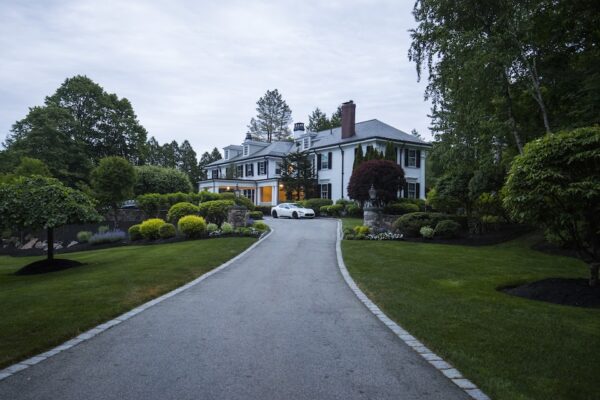
The best residential curb appeal ideas combine thoughtful landscaping, clean walkways, attractive plantings, outdoor lighting, defined garden borders, seasonal color, and well-maintained exterior features. Even relatively simple improvements, such as refreshing mulch, defining landscape beds, or adding plants around the entrance, can make a home feel more welcoming. For homeowners in Georgetown, MA, these improvements can also strengthen perceived property value, neighborhood appeal, and pride of ownership while creating an exterior that looks cared for throughout the year.
Your home’s exterior begins creating an impression before anyone reaches the front door. Visitors notice the condition of the lawn, planting beds, trees, walkways, driveway edges, lighting, and entrance. When these elements complement one another, the property feels balanced and inviting. However, overgrown plants, empty beds, damaged lawn areas, outdated walkways, or poorly coordinated landscaping can weaken the appearance of even a beautiful home.
For Georgetown homeowners, curb appeal also needs to respond to New England’s changing seasons. Plants need to suit local conditions, walkways need to remain practical, and structural landscape elements should continue looking attractive when flowers and deciduous plants become dormant. A strong design considers not only how the property appears at the height of summer but also how it performs during spring, fall, and winter.
At ND Landscape Services, we understand that creating an attractive residential landscape involves much more than placing a few plants around a house. Good landscape design considers proportion, color, texture, drainage, walkways, lighting, seasonal interest, maintenance expectations, and the architecture of the home. With thoughtful planning, an ordinary front yard can become a polished and welcoming landscape that feels naturally connected to the property.
1. What Is Residential Curb Appeal?
Residential curb appeal refers to how attractive, welcoming, and well maintained a home appears when viewed from the street or property entrance. It includes the condition and design of lawns, trees, shrubs, planting beds, walkways, driveways, lighting, exterior accents, and the areas surrounding the front entrance.
The most effective residential curb appeal ideas usually improve several of these elements together instead of treating each feature as a separate project. For example, installing a new walkway can improve an entrance, but combining that walkway with defined planting beds, low-growing greenery, seasonal flowers, and landscape lighting creates a much stronger overall effect.
Curb appeal does not necessarily require a complete landscape renovation. In many cases, the biggest improvements come from correcting small issues that distract from the home. Cleaner landscape edges, healthier turf, refreshed mulch, improved lighting, or better-balanced plantings can significantly change how the property appears from the street.
2. 15 Residential Curb Appeal Ideas for a More Attractive Home
The following residential curb appeal ideas focus on practical improvements that can create a noticeable visual difference while supporting a more cohesive long-term landscape. Some can provide relatively quick improvements, while others may become part of a larger residential landscape design.
1. Create a Welcoming Front Entrance
Your front entrance should act as the visual destination of the landscape. Visitors should naturally understand where they need to walk and where the main entrance is located. When too many plants, trees, decorative features, or hardscape elements compete for attention, the entrance can become visually confusing.
Start by establishing a clear path toward the front door. Then frame the entrance with appropriately scaled greenery, containers, ornamental plants, or seasonal flowers. Plants should enhance the doorway without blocking it, while walkways should guide people naturally from the driveway or street toward the entrance.
You can also repeat colors or materials used elsewhere on the property to create visual consistency. For example, stone used in a walkway might appear again in nearby landscape borders or planting beds. These small connections help the entrance feel intentionally designed rather than separated from the rest of the yard.
2. Add Colorful Foundation Plantings
Foundation plantings soften the transition between a home and its surrounding landscape. They can make large exterior walls feel less bare while adding depth, texture, and seasonal color around the building.
However, successful foundation planting requires more than choosing plants that look attractive at the garden center. Consider mature size, sunlight exposure, soil conditions, drainage, maintenance requirements, seasonal appearance, and the relationship between the plant and nearby windows, walkways, doors, and architectural features.
A layered planting arrangement often creates stronger visual depth. Taller shrubs can provide structure in appropriate background areas, medium-height plants can fill the middle of the bed, and lower-growing plants can soften visible edges. Combining foliage colors and textures also helps the landscape remain interesting when fewer plants are flowering.
3. Refresh Your Landscape Beds With Mulch
Fresh mulch can create one of the quickest visible improvements in an established residential landscape. It creates a cleaner surface within planting beds and provides contrast between lawns, shrubs, flowers, and other landscape elements.
Mulch can also help conserve soil moisture and reduce certain weed problems when it is applied correctly. However, homeowners should prepare planting areas before adding another layer. Remove visible weeds, clean up plant debris, and redefine the edges of the bed so the finished area looks intentional.
Avoid simply piling new mulch over excessive amounts of old material. Mulch should also be kept away from direct contact with tree trunks and plant stems. When installed properly, it can make shrubs, perennials, and ornamental plants stand out while giving the property a more finished appearance.
4. Define Landscape Beds With Decorative Borders
Clearly defined landscape beds create visual organization throughout the yard. Without clean separation, grass can gradually spread into planting areas while mulch or soil moves into the lawn. Over time, this can make even healthy landscapes look untidy.
Homeowners can use natural edging, stone, masonry, metal edging, or other suitable materials to separate planting areas from lawns and walkways. The right choice depends on the architecture of the home, the materials already present, and the overall landscape style.
A traditional property may work particularly well with natural stone, while a more contemporary home may benefit from cleaner lines and simpler edging materials. The goal is not simply to create a physical barrier. A successful border should make the landscape feel more organized while supporting the broader design of the home.
5. Upgrade Your Front Walkway
The front walkway serves both a practical and visual purpose. It guides visitors to the main entrance while helping establish the character and sense of arrival for the entire property.
An existing walkway that appears cracked, narrow, uneven, poorly positioned, or disconnected from surrounding landscaping can weaken the entrance. Updating its shape or materials can make a noticeable difference, particularly when the walkway occupies a prominent part of the front yard.
Natural stone, pavers, brick-inspired surfaces, and other durable materials can create different styles depending on the architecture of the home. Some properties benefit from a direct walkway, while others may look more natural with a subtle curve.
The surrounding landscape matters as well. Low-growing plants, decorative stone, planting beds, and landscape lighting can transform a basic pathway into an important design feature. Homeowners planning a larger outdoor transformation can explore professional Residential Landscaping Services to coordinate walkways, plantings, borders, and other exterior features.
6. Install Landscape Lighting
Landscape lighting can dramatically change how a property looks after sunset. Instead of allowing the entrance, walkways, trees, and landscape features to disappear into darkness, carefully positioned lighting can extend the visual appeal of the property into the evening.
Lighting can highlight pathways, architectural features, ornamental trees, retaining elements, and important planting areas. It can also help improve visibility as homeowners and visitors move between driveways, walkways, and entrances after dark.
However, effective lighting does not mean using the brightest fixtures possible. Excessive brightness can produce glare and make a residential setting feel harsh. A layered approach often creates a more comfortable result, with pathway lighting supporting visibility, accent lighting highlighting selected landscape features, and softer illumination around the entrance creating a welcoming atmosphere.

7. Add Seasonal Flowers for Immediate Color
Seasonal flowers provide one of the easiest ways to add energy and visual interest to a front landscape. They work particularly well around entrances, mailboxes, walkways, patios, and planting beds that receive significant attention from the street.
Rather than spreading a few flowers across a large property, consider concentrating seasonal color where it will have the strongest effect. A fuller planting around the front steps or entrance may create a more noticeable focal point than small groups scattered throughout the entire yard.
Annual plants can provide flexibility because colors and combinations can change throughout the growing season. Meanwhile, perennial plants can return in future seasons and become part of the permanent landscape. Combining both approaches can help homeowners balance immediate color with longer-term planting value.
8. Use Trees and Shrubs to Create Structure
Flowers add color, but trees and shrubs often create the structural framework of a residential landscape. Well-positioned trees can frame the home, add vertical interest, and connect the property with its surroundings. Shrubs can soften foundations, define planting areas, and help transition between different parts of the yard.
Mature size should always guide plant selection. A shrub that appears small during installation may eventually cover a window or crowd a walkway. Similarly, a tree placed too close to the home can become visually overwhelming or create maintenance concerns as it matures.
Choose plants that fit the available space rather than relying on constant pruning to control plants that were too large for the location from the beginning. A thoughtful landscape plan considers what trees and shrubs will look like several years after installation, not only how they appear on planting day.
9. Improve the Appearance of Your Lawn
A healthy lawn often acts as the visual background for the rest of the landscape. When the grass appears consistent and maintained, planting beds, trees, walkways, and other landscape elements can stand out more effectively.
Thin areas, bare patches, weeds, irregular edges, and visible damage can distract from otherwise attractive improvements. Depending on the property, lawn care may involve improving soil conditions, reseeding areas, adjusting mowing practices, addressing irrigation concerns, or repairing sections affected by traffic or environmental conditions.
Clean lawn edges also make a significant difference. Maintaining clear separation around walkways, driveways, and planting beds can give the entire yard a more polished appearance, even when no major landscape renovation has taken place.
10. Add Decorative Planters Near the Entrance
Decorative containers provide a flexible way to enhance an entrance without making permanent changes to the surrounding landscape. They can add seasonal color, greenery, texture, and visual balance around doors, porches, steps, or patio areas.
Scale plays an important role in choosing planters. Small containers can look insignificant beside a large entrance, while oversized planters may overwhelm narrow steps or smaller porches. Select containers that complement both the size and style of the home.
Plant combinations should also suit the available sunlight and watering conditions. Combining taller plants with fuller middle layers and trailing varieties can create greater visual depth. Because containers are easy to update seasonally, they can also help refresh the entrance throughout the year.
11. Create Layers With Plants of Different Heights
Planting beds often feel flat when every plant reaches approximately the same height. Using plants with different mature heights creates depth and helps the landscape feel fuller and more natural.
Taller structural plants can occupy suitable background areas, while medium-height plants can fill the middle of the planting bed. Lower-growing plants can soften edges and create a gradual visual transition toward lawns or walkways.
However, layering should not result in rigid rows unless the design intentionally calls for a formal appearance. Grouping plants naturally and repeating selected varieties can produce a more established look while maintaining visual organization. Repeated colors, textures, or plant species can also help connect separate landscape areas across the property.
12. Improve the Driveway Border
Driveways occupy a significant amount of visible space on many residential properties, which means their edges can influence the overall appearance of the front yard. Clean lawn edges, organized planting areas, low shrubs, decorative stone, or other landscape elements can make a driveway feel more integrated with the property.
Homeowners do not necessarily need to landscape the entire length of the driveway. In many cases, focusing on the entrance, transitions near walkways, or the section closest to the home can create enough visual interest without adding excessive maintenance.
Plant placement should remain practical. Keep shrubs, flowers, and other plant material far enough from vehicle areas so they do not interfere with visibility, doors, snow management, or everyday traffic. The goal is to soften the driveway without making it less functional.
13. Add a Statement Landscape Feature
A carefully selected focal point can give the front landscape a stronger identity. Depending on the property, this might include an ornamental tree, specimen plant, natural stone feature, decorative planter, garden structure, or another visually distinctive landscape element.
The most effective focal features connect with the surrounding landscape rather than standing alone. For example, an ornamental tree can feel more intentional when paired with complementary plants, a defined planting bed, and subtle lighting.
Restraint is important. When homeowners add too many statement features, the yard can begin to feel visually cluttered. One or two strong focal elements usually create a better result than several competing decorations.
14. Hide or Soften Utility Areas
Some exterior features are necessary but visually distracting. HVAC equipment, hoses, utility boxes, trash storage areas, and other functional items can draw attention away from otherwise attractive landscaping.
Plants, fencing, screening, or thoughtful layout changes may help reduce their visual impact. However, any solution must preserve appropriate access, ventilation, safety, and clearance around equipment.
The objective does not always need to be complete concealment. In many situations, simply redirecting attention toward more attractive planting areas or focal features can make utility areas less visually dominant while keeping them practical and accessible.
15. Create Four-Season Visual Interest
A strong residential landscape should not depend entirely on summer flowers. Georgetown experiences distinct seasonal changes, so homeowners benefit from designing outdoor spaces that maintain structure and interest throughout more of the year.
Evergreen plants can provide winter greenery and permanent structure, while ornamental grasses may contribute texture beyond the main growing season. Flowering shrubs, perennials, and trees can provide spring and summer color, while certain plants offer attractive fall foliage or interesting branching forms after leaves drop.
Hardscape also plays an important role in four-season design. Walkways, natural stone, retaining features, decorative borders, and landscape lighting remain visible when plants become dormant. Combining permanent structure with seasonal plant interest helps the property look intentional throughout the year rather than attractive during only one season.
3. Why Is Curb Appeal Important for Your Home?
Curb appeal matters because people form opinions about properties quickly. The front landscape communicates whether the home feels welcoming, organized, carefully maintained, outdated, or neglected. Although landscaping is only one part of a property’s condition, it can strongly influence the overall first impression.
For homeowners considering a future sale, an attractive exterior can help create a positive experience before prospective buyers enter the home. A clean and thoughtfully maintained landscape may reinforce the impression that the property receives regular care. However, curb appeal remains valuable even when selling the home is not part of your plans.
Improving the landscape can increase your own enjoyment of the property. A welcoming entrance can make arriving home more enjoyable, while attractive plantings and clean outdoor spaces create a better environment for guests. Thoughtful landscaping can also help the home fit naturally within the surrounding neighborhood.
Well-planned residential curb appeal ideas can provide several practical and visual benefits:
- Create stronger first impressions: Attractive landscaping can make the home feel welcoming as soon as someone approaches the property.
- Improve perceived property value: A polished exterior can reinforce the appearance of a property that receives consistent care.
- Increase homeowner pride: An attractive landscape creates an outdoor environment homeowners can appreciate every day.
- Support neighborhood appearance: Maintained residential properties contribute to the visual quality of the surrounding area.
- Improve outdoor functionality: Walkways, lighting, organized planting areas, and thoughtful landscape layouts can improve both appearance and everyday use.
As a result, curb appeal should not be viewed only as decoration. It contributes to the overall experience of the property and helps connect the home’s architecture with its outdoor surroundings.
4. How to Improve Your Home’s Curb Appeal Step by Step
A successful curb appeal project begins with planning rather than purchasing random plants, mulch, or decorative features. Start by identifying what currently weakens the property’s appearance, then prioritize improvements according to visibility, function, budget, and long-term maintenance. A coordinated process helps prevent disconnected upgrades and creates a finished landscape that feels more intentional.
- Step 1: View the property from the street. Stand where visitors first see your home and evaluate the property as objectively as possible. Look for overgrown plants, bare spaces, damaged edges, unattractive walkways, weak focal points, or areas that distract from the entrance. Taking a few photos can make visual problems easier to identify.
- Step 2: Identify the main focal point. Determine where you want visitors to look first. For most homes, the front door should become the primary focal point. Use pathways, lighting, plant placement, and color to guide attention naturally toward the entrance.
- Step 3: Fix maintenance problems first. Trim overgrown vegetation, remove declining plants, clean hardscape, redefine landscape beds, and address visible lawn problems before investing heavily in decorative upgrades. A clean foundation makes later improvements more effective.
- Step 4: Add improvements in visual layers. Begin with larger structural elements such as trees, shrubs, major planting beds, and walkways. Then add medium-sized plantings before finishing with flowers, mulch, lighting, containers, and smaller details.
- Step 5: Plan for future growth and maintenance. Consider how the landscape will look several years from now. Choose plants that fit the available space at maturity and think about future watering, pruning, seasonal cleanup, replacement, and general upkeep before finalizing the design.
Following a coordinated process can produce stronger long-term results than making isolated changes without an overall plan. If several parts of your front yard need improvement, professional landscape design can help combine individual projects into one cohesive outdoor environment.
5. When Is the Best Time to Improve Curb Appeal?
The best time to improve curb appeal depends on the type of work you are considering. Spring is often an ideal period for evaluating winter damage, cleaning planting beds, refreshing mulch, addressing lawn problems, and beginning new planting projects. It also allows homeowners to prepare outdoor areas before the height of the growing season.
Summer provides a different perspective because established landscapes are usually at their fullest. This makes it easier to identify overcrowded plants, bare areas, weak color combinations, irrigation concerns, and other issues that may not be obvious earlier in the year. It can also be a useful time to consider lighting, walkways, borders, and other improvements that are not dependent on spring planting.
Fall can support cleanup, landscape evaluation, and certain planting projects. It is also a good time to observe where leaves collect, how planting areas transition into the colder months, and which parts of the property lack lasting structure. Winter can then provide valuable planning time because reduced foliage makes sightlines, tree placement, walkway layouts, and structural landscape features easier to evaluate.
For that reason, curb appeal does not need to become a once-a-year project. Each season reveals different strengths and weaknesses, allowing homeowners to improve the property gradually and strategically.
6. Where Should You Focus Your Curb Appeal Budget?
Start by investing in the areas people notice first. For most homes, this means the front entrance, main walkway, foundation planting beds, lawn edges, driveway approach, and landscape features that are highly visible from the street.
However, every property has a different layout. A home with a long driveway may benefit from stronger landscaping near the property entrance, while a house positioned close to the road may receive more value from updated foundation plantings, a better front walkway, or improved entrance details.
The condition of the existing landscape should also influence where you spend. If the lawn and planting beds are already healthy, adding lighting or seasonal color may provide a noticeable improvement. If shrubs are overgrown and walkways are poorly positioned, investing in decorative accents before correcting those larger issues may provide limited value.
Homeowners considering more extensive upgrades can work with Residential Landscaping Services in Georgetown, MA to identify high-impact areas and develop a landscape plan that complements the property’s architecture, outdoor conditions, and maintenance expectations.
7. How to Maintain Your Home’s Curb Appeal
Curb appeal requires ongoing maintenance because residential landscapes continually change. Plants grow larger, flowers fade, mulch breaks down, lawn edges spread, leaves collect, and outdoor materials weather over time. Without regular attention, even a professionally designed landscape can gradually lose its polished appearance.
A simple maintenance routine can help preserve the visual quality of the property:
- Inspect plants regularly: Remove dead material and watch for trees or shrubs that are beginning to outgrow their intended spaces.
- Maintain clean landscape edges: Redefine lawn and planting bed edges when necessary to preserve visual separation.
- Refresh mulch appropriately: Maintain a neat appearance without creating excessive mulch buildup around plants and trees.
- Keep walkways visible and clean: Remove debris and control plant growth that interferes with pedestrian access.
- Review the landscape seasonally: Look for bare areas, declining plants, drainage concerns, lawn problems, and areas that may need future improvement.
Routine maintenance also gives homeowners an opportunity to improve the landscape gradually. If a particular plant struggles year after year, replacing it with a species better suited to the location may provide better results than continually trying to correct the same problem.
8. A Simple Four-Season Curb Appeal Checklist
Instead of waiting until the front yard looks neglected, review the property throughout the year. Regular observation helps identify smaller problems before they become more noticeable maintenance or design concerns.
- Spring: Clean planting beds, inspect winter damage, redefine edges, review lawn conditions, refresh plantings where necessary, and prepare high-visibility areas for the growing season.
- Summer: Maintain lawns and landscape beds, monitor plant growth, add seasonal color where appropriate, manage overgrown vegetation, and evaluate how the landscape looks when plants reach their fullest size.
- Fall: Complete seasonal cleanup, manage leaves, inspect walkways and other hardscape, evaluate planting opportunities, and identify improvements that can be planned for the following year.
- Winter: Evaluate the structural appearance of the landscape, review nighttime lighting, inspect major sightlines, and plan larger landscape improvements before the next active growing season.
This seasonal approach can make curb appeal easier to manage. More importantly, it allows homeowners to make deliberate improvements throughout the year rather than depending on rushed fixes immediately before a gathering, event, or future home sale.
Build a Better First Impression With ND Landscape Services
Improving curb appeal does not require filling every available space with flowers or completing every landscape project at once. The strongest residential landscapes combine attractive plantings, clear walkways, defined edges, thoughtful lighting, seasonal interest, and an entrance that naturally welcomes visitors.
Begin by identifying the features that currently weaken your home’s first impression. Then prioritize projects that provide both visual and practical value. Smaller updates such as clean edging, refreshed mulch, pruning, and seasonal flowers can produce noticeable improvements, while larger projects such as redesigned planting beds, new walkways, landscape lighting, and structural plantings can reshape how the entire property feels.
For homeowners in Georgetown, MA, ND Landscape Services can help transform disconnected outdoor improvements into a thoughtful residential landscape. Professional design can be especially useful when existing plants have become overgrown or outdated, the front entrance lacks impact, or multiple landscape features need to work together more effectively.
The right residential curb appeal ideas should do more than make a property look attractive for a few weeks. They should complement the architecture of the home, create a welcoming first impression, remain practical to maintain, and continue providing visual value as the seasons change.
Ready to improve your home’s first impression? Contact ND Landscape Services to discuss a residential landscape design that can bring greater beauty, structure, and curb appeal to your Georgetown, MA property.