
TL;DR
Preparing your lawn for winter helps protect grass roots, reduce disease, and ensure a greener, healthier yard come spring. Key steps include mowing to the right height, clearing leaves and debris, aerating, fertilizing, and treating weeds before the first freeze. Want a professional winter lawn prep plan tailored to your yard? Call 978‑352‑5400 or contact ND Landscape to schedule your service!
A step-by-step guide on how to prepare your lawn for winter and protect your grass through New England’s harshest season.
As fall transitions into winter, your lawn begins to slow down—but that doesn’t mean your work is done. Knowing how to prepare your lawn for winter is key to ensuring it comes back healthy and vibrant in the spring. From aerating and fertilizing to clearing leaves and adjusting mower height, winter prep can make a lasting difference in your lawn’s appearance and performance year-round.
Need help getting your property winter-ready? Call ND Landscape Services at 978-352-5400 or contact us online to schedule your seasonal lawn care consultation.
Why Winter Lawn Prep Matters in New England
Massachusetts winters can be tough on grass. Between freezing temperatures, heavy snow, and dry air, your lawn endures months of stress. Proper winter preparation helps grass:
- Develop stronger roots
- Store nutrients
- Resist disease and frost damage
- Recover faster when spring returns
Skipping these steps can leave your lawn thin, patchy, or overtaken by weeds come April.
Step 1: Keep Mowing, But Lower the Height Gradually
It’s tempting to stop mowing in late fall, but regular trimming is still important. Continue mowing until grass growth fully stops—usually after the first hard frost. As winter approaches, lower the mower height gradually.
- Final mow height: Around 2 to 2.5 inches
- Avoid scalping: Cutting too short can expose roots to frost and lead to stress
- Why it matters: Shorter grass is less prone to mold, pests, and snow matting during the winter months
Step 2: Rake Up Leaves Promptly
A layer of fallen leaves might look picturesque, but it’s not healthy for your grass. Wet, compacted leaves can:
- Block sunlight
- Trap moisture
- Promote fungus and pests
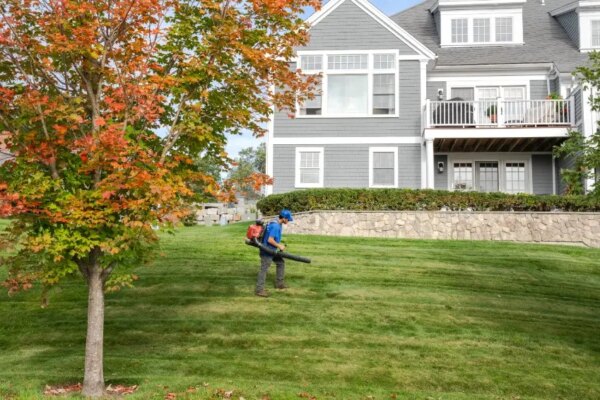
Rake up leaves regularly or use a mulching mower to shred them into fine pieces that decompose quickly. A clean, clear lawn allows your grass to “breathe” going into dormancy.
Step 3: Aerate the Soil
Compacted soil prevents air, water, and nutrients from reaching the roots—especially in high-traffic areas. Fall is the ideal time to aerate your lawn before the ground freezes.
- Core aeration: Removes small plugs of soil to reduce compaction and improve circulation
- When to aerate: Mid to late fall, when soil is moist but not frozen
- Benefits: Stronger root systems and better fertilizer absorption
Aeration gives your lawn a chance to develop resilience ahead of harsh winter conditions.
Step 4: Apply a Fall Fertilizer
Fall fertilization is one of the most important steps in winter lawn prep. A late-season feeding provides essential nutrients that help grass store energy and repair root systems.
- Use a slow-release fertilizer with a high potassium content for root strength
- Timing: Apply 2–3 weeks before the ground freezes
- Avoid high-nitrogen formulas late in the season—they can encourage unwanted top growth
Look for a product labeled “winterizer” or formulated specifically for fall application.
Step 5: Overseed Thin or Bare Patches
If your lawn has suffered damage from heat, drought, or foot traffic, overseeding in the fall gives you a head start on spring recovery.
- Choose cool-season grasses like Kentucky bluegrass or fescue for New England yards
- Loosen the topsoil before applying seed to help with germination
- Keep the area moist until the first frost to encourage root development
Pair overseeding with aeration for best results.
Step 6: Control Weeds Before Dormancy
Weeds compete with grass for nutrients and space—and many overwinter in your lawn, waiting to reappear in spring. Applying a selective herbicide in the fall can prevent this.
- Focus on broadleaf weeds like dandelions and clover
- Apply on a dry, mild day when weeds are still active
- Avoid over-applying—use only on affected areas to protect desirable grass
Removing weeds now helps your lawn come back greener and healthier in the spring.
Step 7: Winterize Your Irrigation System
Don’t forget to protect your sprinkler system from freezing temperatures. If you haven’t already, it’s time to:
- Shut off the water supply to your irrigation system
- Drain remaining water from valves and lines
- Blow out the lines with compressed air if necessary
Frozen pipes and valves can cause costly damage and delay spring startup.
Step 8: Clear Lawn Furniture and Equipment
Leaving heavy objects like outdoor furniture, toys, or fire pits on your lawn through the winter can cause permanent damage to the turf underneath. Before the snow flies:
- Remove or store all portable structures
- Clean up garden tools and hoses
- Mark sprinkler heads or landscape borders to prevent snowplow or shovel damage
A clear lawn is a protected lawn during the snowy months.
Step 9: Apply Mulch in Garden Beds
While not directly related to the lawn, fall mulching protects nearby garden beds and tree roots. A fresh layer of mulch:
- Regulates soil temperature
- Retains moisture
- Prevents weed growth
Just be sure to keep mulch away from grass edges to avoid creeping into your turf.
Step 10: Plan for Snow and Ice Management
Lastly, if you’re responsible for shoveling or salting your walkways, be mindful of how your methods affect the lawn:
- Use lawn-safe de-icing products to avoid salt damage
- Shovel snow away from the lawn when possible
- Avoid piling snow on the same spot repeatedly, which can smother the grass
Smart snow management reduces winter injury and keeps your lawn healthier overall.
Protect Your Lawn Now for a Greener Spring
Learning how to prepare your lawn for winter is an investment in the long-term health of your landscape. With the right mix of mowing, fertilizing, aerating, and cleanup, you’ll give your lawn the strength it needs to survive the cold and bounce back strong in the spring.
If you’d like expert help with seasonal lawn care, reach out to ND Landscape Services. We provide professional maintenance services to help homeowners across the North Shore and Greater Boston protect their lawns year-round.
Call us at 978-352-5400 or schedule your consultation here to get your lawn winter-ready.
Winter Lawn Preparation — FAQ
Why should I prepare my lawn for winter?
Winter preparation strengthens your grass, reduces disease risks, prevents thatch buildup, and gives your lawn a head start for spring growth.
When is the best time to prepare my lawn for winter?
In New England, aim for late fall — after growth slows but before the ground freezes — typically late October through November.
What are the most important winter prep steps?
Important steps include final mowing at the proper height, leaf and debris cleanup, aeration, fall fertilization, weed control, and soil testing if needed.
Do I need professional help for winter lawn prep?
Professional services save time and ensure proper timing, equipment, and techniques — especially for aeration, fertilization, and large lawns.
Will winter prep help my lawn come spring?
Yes — a proper winter prep plan improves root health and nutrient reserves, which leads to stronger green‑up and overall lawn health in spring.
How do I schedule winter lawn preparation with ND Landscape?
Call 978‑352‑5400 or fill out our contact form to book your winter lawn prep service with our experts!